On this page
Effective marketing is no longer about casting a wide net—it's about using a scalpel. Advanced segmentation and personalization have become the bedrock of successful strategies, enabling B2B companies to deliver hyper-targeted experiences that drive engagement and revenue. But here’s the kicker: while the rewards are immense, achieving precision requires the right mix of strategy, technology, and insight.
In this blog, we’ll explore why segmentation and personalization are must-haves for B2B marketers, the tools leading the charge, and how to navigate common pitfalls.
Why Advanced Segmentation Is the Foundation of Precision Marketing
Imagine walking into a store where everything is tailored to your preferences. That’s the power of segmentation in marketing. In B2B SaaS, segmentation allows marketers to focus their efforts on high-value leads and accounts, ensuring every interaction counts.
Key segmentation criteria include:
- Ideal Customer Profile (ICP): Targeting accounts that align with your product’s value proposition.
- Geography: Regionalizing campaigns for relevance.
- Verticals and Market Segments: Addressing industry-specific pain points.
- Firmographics: Segmentation based on company size, revenue, and other organizational attributes.
When segmentation is done right, it becomes the springboard for personalization.
The Personalization Imperative: Beyond Surface-Level Marketing
Segmentation tells you who to target; personalization tells you how. Personalization enhances engagement by tailoring content, messaging, and offers to resonate deeply with your audience. It’s no longer enough to personalize just names in emails—B2B customers expect experiences that feel crafted for their unique needs and challenges.
The payoff? According to a McKinsey report, companies that excel at personalization generate 40% more revenue from their marketing initiatives compared to their peers.
The Tech Powering Advanced Segmentation and Personalization
From AI-driven insights to real-time personalization platforms, the tech stack for segmentation and personalization has evolved dramatically. Here's how you can harness the power of technology to transform your marketing efforts.
1. Dynamic Content Personalization
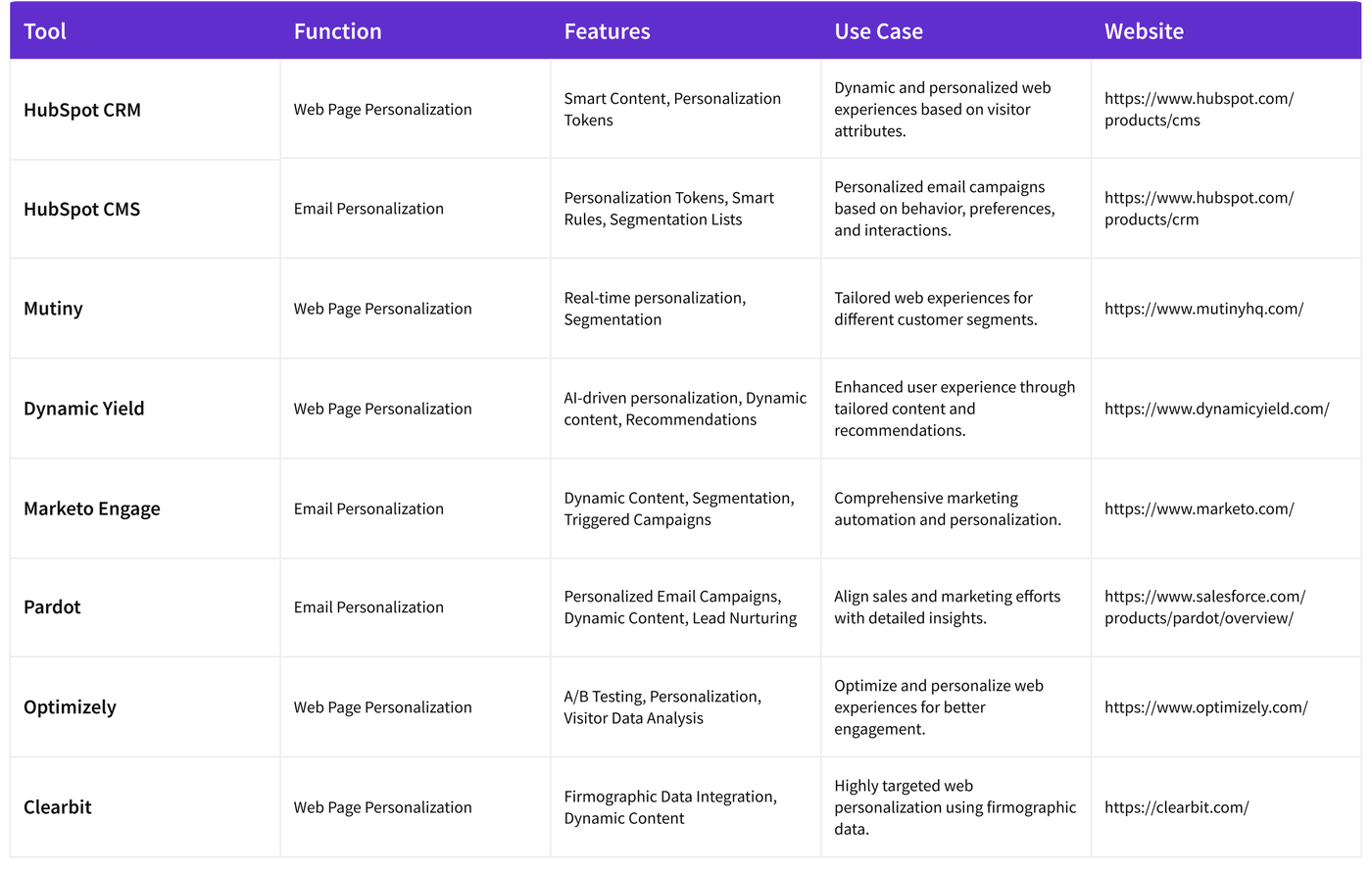
Tools like HubSpot Smart Content and Mutiny excel at creating real-time, tailored web experiences. These platforms use visitor data to dynamically adjust content, ensuring every touchpoint is hyper-relevant.
- HubSpot Smart Content: Leverages personalization tokens and smart rules to deliver dynamic web pages and emails tailored to audience attributes.
- Mutiny: Specializes in segmentation-based web personalization, allowing B2B companies to display unique content to different buyer personas in real time.
Use Case: Imagine a potential client from the healthcare industry visiting your website. Instead of seeing generic content, they’re greeted with case studies and testimonials from healthcare companies you’ve helped.
2. AI and Machine Learning
Artificial intelligence is redefining how marketers approach segmentation. AI-powered platforms analyze behavioral data, engagement patterns, and purchase intent to dynamically segment audiences with unparalleled precision.
- What It Does: AI identifies patterns in vast datasets, creating micro-segments and offering predictive insights for hyper-personalized campaigns.
- Why It Matters: Unlike static segmentation methods, AI adapts to real-time behaviors, ensuring your marketing stays relevant as customer needs evolve.
Example: A SaaS company can use AI to identify leads showing high intent, such as repeated visits to pricing pages, and trigger personalized follow-up emails.
3. Marketing Automation Tools
Platforms like Marketo Engage, Pardot, and Dynamic Yield enable marketers to scale personalization efforts by automating repetitive tasks while maintaining a personal touch.
- Marketo Engage: Offers dynamic content and triggered campaigns to ensure your messaging is timely and relevant.
- Pardot: Aligns sales and marketing with personalized email campaigns, lead nurturing, and in-depth insights.
- Dynamic Yield: Focuses on AI-driven personalization, recommending tailored content and products based on user behavior.
Use Case: A lead downloads an eBook from your website. Automation tools can trigger an email sequence with related resources tailored to their industry and engagement level.
4. Firmographic Data Integration
For B2B companies, tools like Clearbit provide a goldmine of firmographic data. These tools integrate with your CRM to enrich visitor profiles with details such as company size, revenue, and industry, enabling hyper-targeted campaigns.
5. Comprehensive CRM and CMS Solutions
Systems like HubSpot CRM and HubSpot CMS bridge the gap between data collection and personalized execution. By consolidating data and enabling seamless integration across marketing channels, these platforms ensure consistency in your segmentation and personalization efforts.
- HubSpot CRM: Allows for segmentation based on customer behavior and engagement, enabling targeted outreach.
- HubSpot CMS: Offers personalization tokens and dynamic content features for personalized web pages and blog posts.
Use Case: Create personalized dashboards for existing customers, showing their usage metrics, renewal timelines, and product recommendations.
Challenges in Precision Marketing
Even with cutting-edge tools, segmentation and personalization are not without hurdles.
- Accurate Segmentation: Bad data leads to bad decisions. Accurate data collection and management are vital to creating meaningful and actionable segments.
- Relevance Without Intrusiveness: Personalization should add value, not raise eyebrows. Overstepping boundaries can alienate potential customers.
Tools for B2B SaaS Segmentation and Personalization
Choosing the right tools is pivotal for success. Here’s a breakdown of top solutions:
Connecting Segmentation and Personalization to Pipeline Impact
While advanced segmentation and personalization improve engagement, their real value becomes clear when these strategies are tied directly to pipeline and revenue outcomes. Many organizations successfully personalize campaigns but struggle to measure how those efforts influence opportunity creation, deal velocity, and conversion rates.
By integrating segmentation insights with CRM and pipeline analytics, marketing teams can identify which audience segments consistently generate high-quality opportunities. For example, certain firmographic segments or industry verticals may demonstrate higher conversion rates or shorter sales cycles, signaling where personalization efforts should be concentrated.
This connection allows marketers to move beyond engagement metrics and evaluate segmentation strategies based on their contribution to pipeline growth. Sales teams also benefit from this alignment, as they can prioritize outreach to segments showing stronger buying signals and higher pipeline potential.
Ultimately, linking segmentation and personalization strategies to pipeline outcomes ensures that precision marketing efforts translate into measurable business impact, helping organizations allocate resources more effectively and drive predictable revenue growth.
The Future of Marketing: Personalized Precision
In a world where buyers are inundated with marketing messages, personalization is the differentiator. But personalization without effective segmentation is like shooting arrows in the dark. The key lies in leveraging advanced tools and AI to create data-driven campaigns that are as precise as they are impactful.
If your marketing strategy isn’t rooted in segmentation and personalization yet, it’s time to rethink. After all, precision isn’t just a luxury in B2B SaaS—it’s a necessity.
Ready to elevate your marketing game? Let's talk..
Download our ebook on Best Practices for Marketing Automation Setup & Attribution to learn more.