Incrementality testing that proves what your marketing caused
Would it have happened anyway? RevSure runs conversion lift, pre-post with difference-in-differences, campaign lift, and counterfactual forecasting on one context layer, with significance checks built into every result.
The gap after launch is the lift.
Min. sample size: met
Illustrative trend. Compare the observed outcome with the holdout to isolate what the campaign added.
Incrementality testing shows whether a marketing activity created additional conversions, pipeline, or revenue beyond what would have happened anyway. RevSure compares results with a control, baseline, or modeled counterfactual on one identity-resolved context layer, then gives your team evidence to fund what actually changed the outcome.
What is incrementality testing?
Incrementality testing measures the conversions, pipeline, or revenue a marketing activity caused against what would have happened without it. It separates true lift from demand that was coming anyway.
- 01
Define the outcome
Choose the funnel stage, conversion, pipeline, or revenue result you need to measure.
- 02
Build the counterfactual
Use a control group, baseline, or modeled forecast to estimate what would have happened without the activity.
- 03
Measure and validate lift
Compare actual performance with the counterfactual, then test significance and validate the minimum sample size using effect size.
- 04
Act on the evidence
Scale the programs that create additional outcomes and stop funding results that would have happened anyway.
Credit is not causation. Prove the lift
Attribution tells you who touched the deal. It cannot tell you what the deal would have looked like without you. Four gaps incrementality closes.
The CFO's counterfactual
"Would we have closed that revenue anyway?" Touch-based credit has no answer, so budget conversations stall on opinion.
Lift that is really noise
A 10% bump looks like a win until you check the sample size. Without power checks, random swings get funded.
Before-and-after is not proof
Pipeline rose after the launch. So did the market. Without a control, seasonality and baseline trends take the credit.
Overlapping tactics blur credit
Paid, events, and outbound run at once. Measure the combined lift of a multi-lever intervention with a model built for many moving parts.
Every lift, checked before you trust it
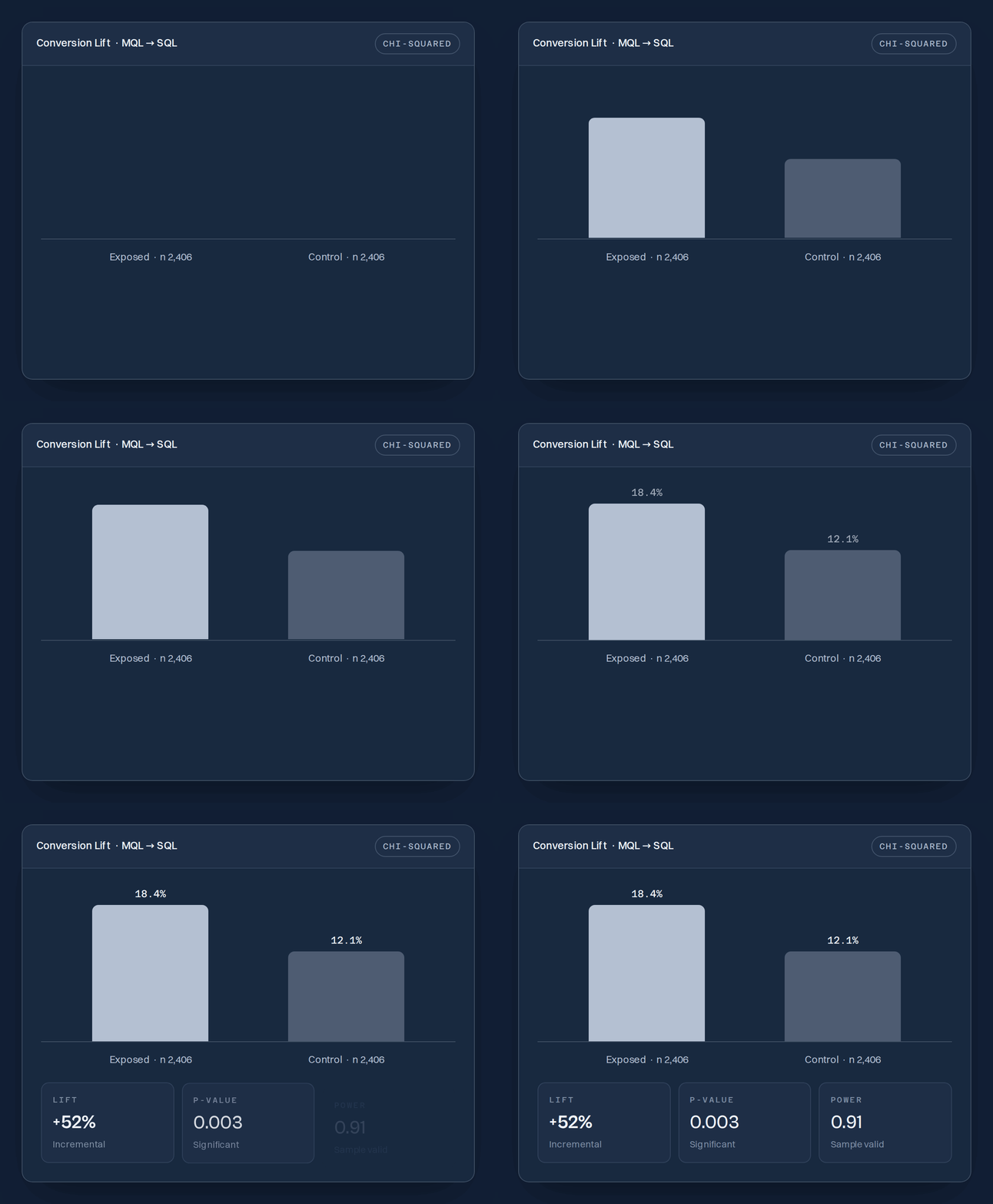
Statistical conversion lift analysis measures how much a campaign or activity lifts conversion, and whether that lift is statistically significant. A Chi-squared test and automatic minimum sample validation make sure the result is not a random fluctuation.
- Chi-squared significance on every conversion comparison
- Automatic minimum sample validation before a result is reported
- Runs on any stage pair, visit to MQL through SQL to won
Before, after, and what the market did
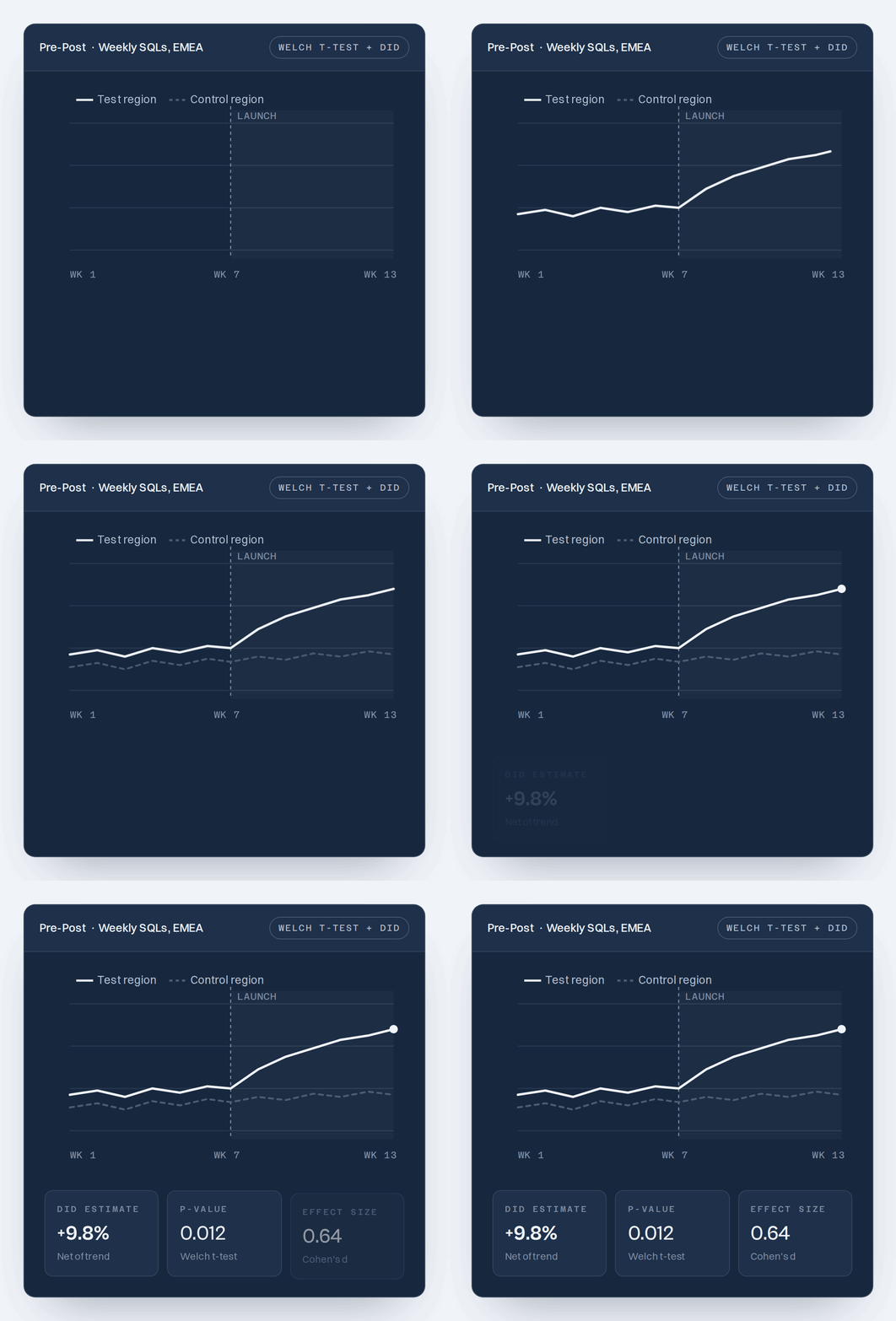
Pre-post analysis measures the change before and after a campaign. A one-tailed Welch two-sample t-test separates meaningful improvement from normal variation. Difference-in-differences adds a control group and accounts for baseline trends.
- One-tailed Welch two-sample t-test, robust to unequal variance
- Minimum sample size validated using effect size
- Difference-in-differences nets out seasonality and market drift
- Test and control defined by region, segment, or account list
Which campaigns earned the next dollar
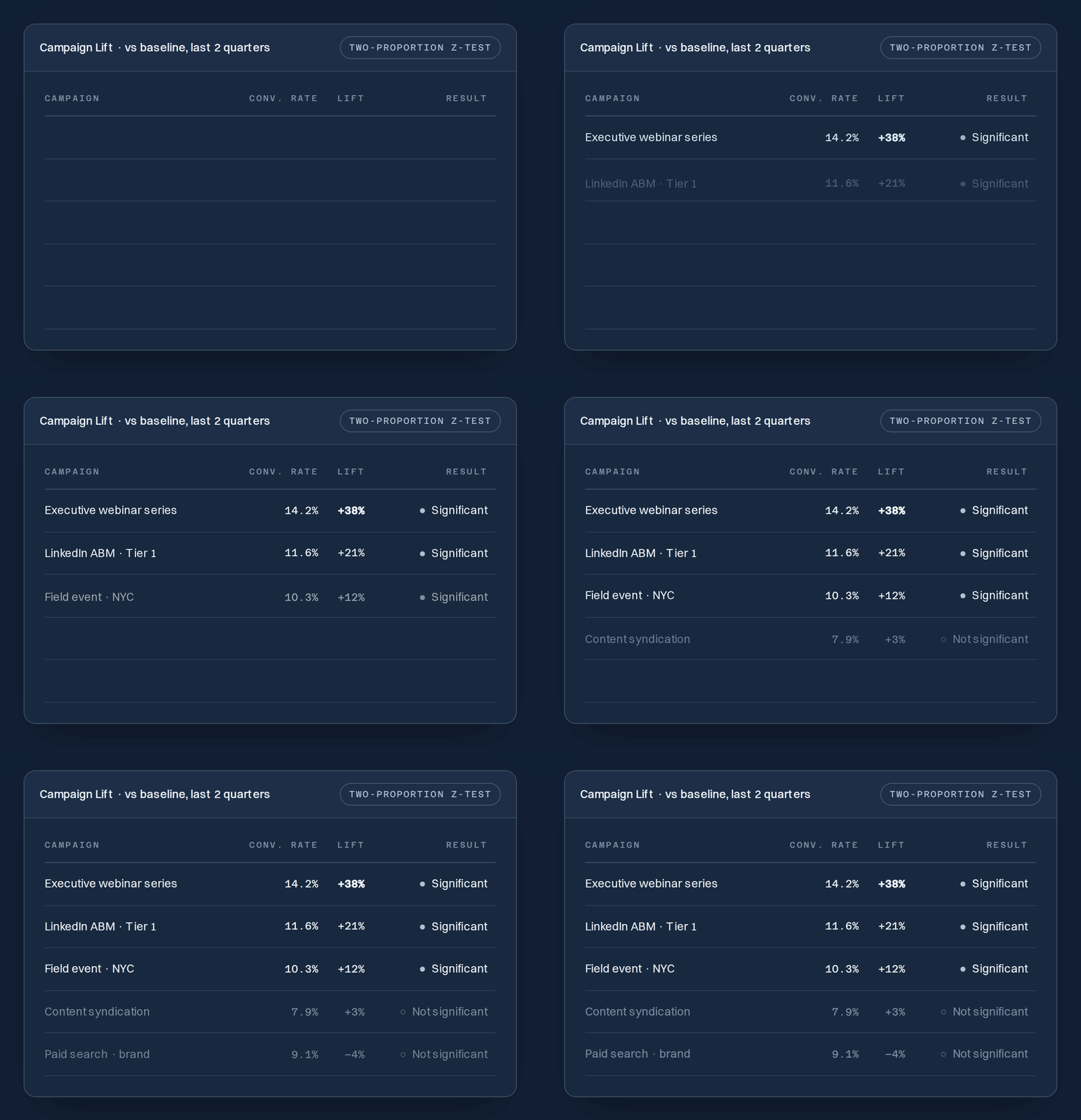
Campaign lift analysis compares conversion rates against baselines or control groups. A Chi-squared test flags which lifts are real, while a two-proportion power calculation sets the minimum sample size for a valid comparison.
- Compare every campaign against a baseline in one view
- Control-group testing for exposed and held-out audiences
- Chi-squared test flags which lifts are real
- Two-proportion power calculation sets the minimum sample size
The world without your campaign, modeled
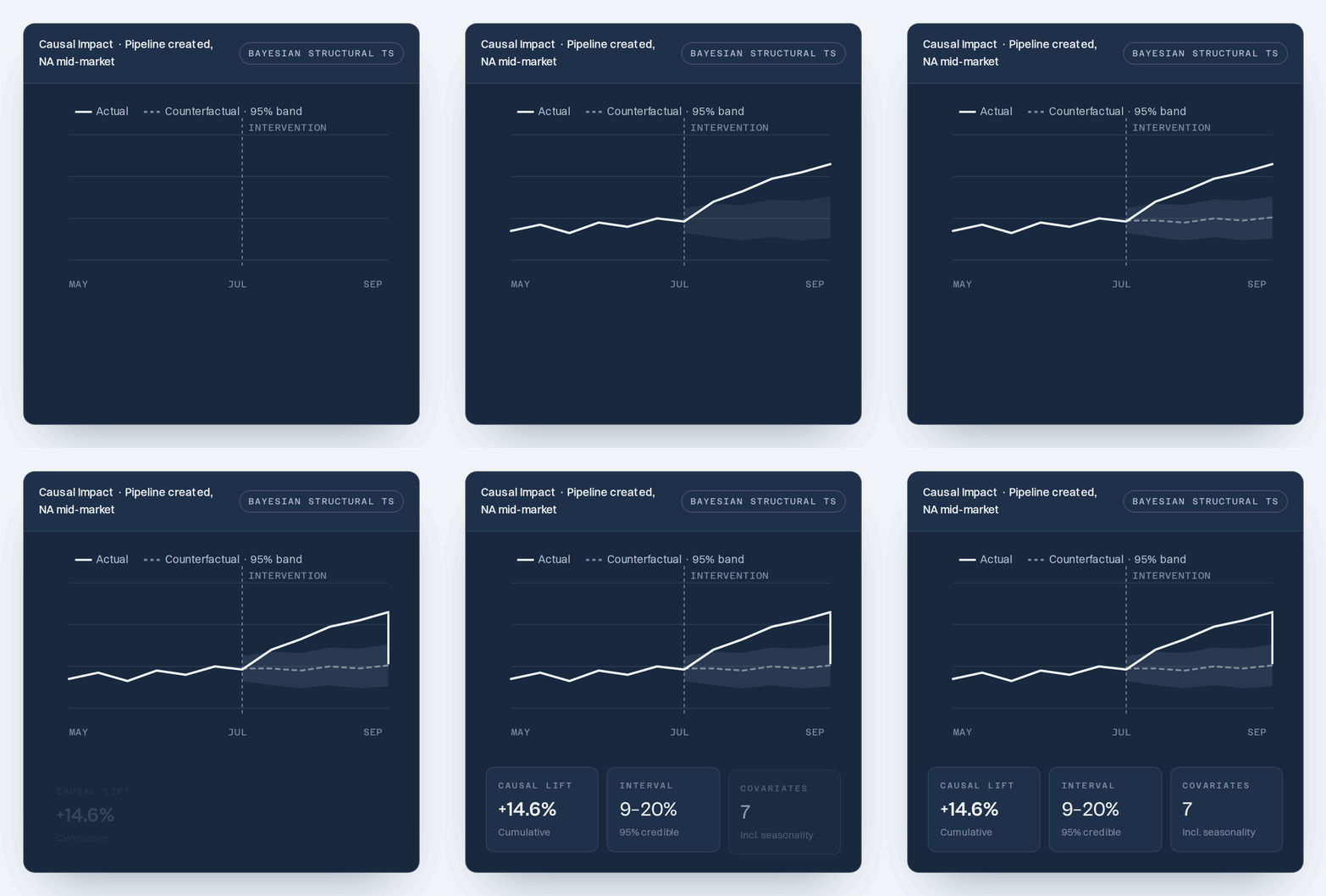
Causal incrementality testing measures the true impact of a marketing intervention. Counterfactual forecasting combines multiple covariates, overlapping tactics, and external factors to estimate the combined lift of a multi-lever intervention.
- Counterfactual forecasting, not last-touch correlation
- Combined lift of a multi-lever intervention
- Seasonality and market shifts accounted for
- Bayesian p-value on every result, so you know if the lift is real
Which incrementality test should you use?
Use conversion or campaign lift for exposed and unexposed audiences, difference-in-differences for regional or segment rollouts, and Multi-Variate Causal Impact Analysis when several tactics overlap.
| Method | Best when | Statistical test | What you get |
|---|---|---|---|
| Statistical conversion lift | You can compare an exposed audience with a held-out one at a funnel stage | Chi-squared test with minimum sample validation | Conversion lift, p-value, minimum sample met |
| Pre-post analysis | A campaign or change starts on a known date | One-tailed Welch two-sample t-test | Before-and-after change, p-value, minimum sample met |
| Difference-in-differences | A change rolls out to some regions, segments, or accounts but not others | DiD estimate against a control group | Lift net of seasonality and market trend |
| Campaign lift | You need to rank many campaigns against a baseline | Chi-squared test with two-proportion power calculation | Lift per campaign, p-value, minimum sample met |
| Multi-Variate Causal Impact Analysis | Tactics overlap and external factors move the numbers | Counterfactual forecasting with multiple covariates | Counterfactual, cumulative causal lift, Bayesian p-value |
Incrementality vs. attribution vs. marketing mix modeling
Attribution assigns credit, marketing mix modeling plans the budget, and incrementality testing proves causation. RevSure runs all three on the same context layer so their answers reconcile.
| Comparison | Incrementality testing | Multi-touch attribution | Marketing mix modeling |
|---|---|---|---|
| Question it answers | Did this activity cause additional outcomes? | Which touches were on the path to the deal? | How much does each channel contribute, and where does it saturate? |
| Method | Control groups, baselines, modeled counterfactuals | Rules-based or AI-weighted credit across touches | Regression on spend and outcomes over time |
| Proves causation | Yes, with significance testing | No, it shows correlation | Estimates it at the channel level |
| Granularity | A campaign, tactic, region, or change | Individual touches and journeys | Channels and the whole budget |
| Best used for | Validating a campaign before scaling it | Day-to-day optimization and journey insight | Annual and quarterly budget planning |
See multi-touch attribution in action
Results that hold up in the budget review
No lift without a test
Chi-squared tests flag which lifts are real. Minimum sample size is set with a two-proportion power calculation.
A result you can trust
Every result carries a Bayesian p-value, so you know whether the measured lift is real.
Enough data to decide
Sample sizes are validated before a result is reported, so small tests do not produce big claims.
Questions, answered
What is incrementality testing in marketing?
Incrementality testing measures the conversions, pipeline, or revenue a marketing activity caused, compared with what would have happened without it. It uses control groups, baselines, or a modeled counterfactual to separate true lift from demand that was coming anyway, so budget goes to programs that change outcomes.
How is incrementality testing different from attribution?
Attribution distributes credit across the touches on a buyer's journey. Incrementality testing asks whether those touches changed the outcome at all. Attribution shows where credit flows, while incrementality confirms which of that credit is causal. RevSure runs both on one context layer so the two answers reconcile.
How do you measure incremental lift?
Incremental lift is the conversion rate of the exposed group minus the conversion rate of the control or baseline group, divided by the control rate. For example, 18.4% exposed versus 12.1% control is a 52% lift. The result only counts if a significance test and a power check both pass.
Which incrementality test should I use?
Use conversion lift or campaign lift when you can compare exposed and unexposed audiences. Use pre-post analysis with difference-in-differences when a change rolls out by region, segment, or account list. Use Multi-Variate Causal Impact Analysis when several tactics overlap and seasonality or market shifts are in play.
What statistical tests does RevSure use for incrementality?
RevSure applies a Chi-squared test for conversion lift and campaign lift. Minimum sample size is set with a two-proportion power calculation. Pre-post analysis uses a one-tailed Welch two-sample t-test, while Multi-Variate Causal Impact Analysis uses counterfactual forecasting. Every result reports a p-value and sample-size validation.
Fund the lift you actually caused
Pinpoint true ROI, refine budgets, and measure the real impact of every campaign. No guesswork, just growth.