Context Engineering: The New Core of Enterprise GTM AI
On this page
Let’s say it plainly: GTM teams don’t have a data problem; they have a context problem. AI isn’t underperforming because the models are weak. It’s underperforming because the systems feeding those models lack shared meaning, semantic structure, and any way to tell AI why a signal matters. In this issue, we break down why bigger stacks and more dashboards won’t define the next era of GTM performance, and why the real advantage goes to teams that master context engineering.
Gartner Spotlight: Context Engineering Becomes the Core of Enterprise AI
Gartner’s recent Context Engineering brief by Avivah Litan highlights a growing reality for GTM leaders: the primary limitation in AI performance is shifting from model capability to the context in which those models operate.
Even strong AI systems struggle when they are fed:
- Fragmented funnel signals
- Inconsistent definitions
- Siloed workflows
- Missing relationships across people, accounts, and intent
Gartner’s perspective is straightforward: Teams that invest in engineering richer, more coherent context will see AI that is more accurate, aligned, and dependable, while those that don’t will face a natural performance ceiling.
Thoughtworks Insight: From Vibe Coding to Context Engineering
Thoughtworks’ latest Technology Radar by Ken Mugrage reinforces the same shift highlighted by Gartner: AI succeeds or fails based on the context it’s given. Early in 2025, “vibe coding” took off as teams experimented with loose prompts and intuition-driven workflows. But the results made its limitations clear- outputs were inconsistent, agents became unreliable, and complexity grew without improving accuracy.
Through work with tools like Claude Code and Augment Code, Thoughtworks found that the real performance unlock comes from engineering context intentionally: grounding AI with the right domain knowledge, constraints, and reference points. This makes agents far more dependable and reduces the rework caused by poorly contextualized inputs.
As organizations move from isolated agents to agentic systems, Thoughtworks’ takeaway aligns directly with this issue’s theme: context, not model size, is becoming the defining factor in how effectively AI can reason and act.
This industry shift mirrors exactly how RevSure AI has architected its agentic foundation.
RevSure Perspective: Agentic AI Only Works When Context Is Engineered
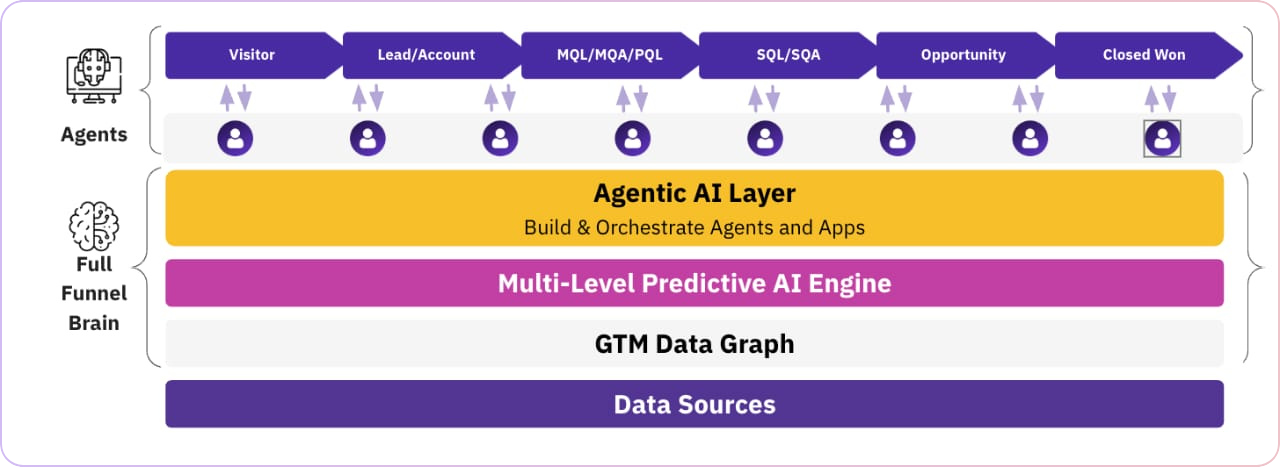
Several foundational ideas underpinning RevSure’s agentic architecture align directly with this issue’s theme:
- Agents fail in isolation. Most GTM agents today operate with narrow, localized inputs, seeing only a lead, only an account, or only one channel. Without shared context, their actions become inconsistent, shallow, or misaligned.
- Full-funnel context is the real differentiator. When agents are grounded in harmonized data across marketing, SDR, sales, customer success, and partner motions, they can reason more accurately, personalize meaningfully, and coordinate actions across the buyer journey.
- Context prevents unpredictability. Guardrails, data governance, tone controls, and auditability ensure agents act safely and consistently, a critical requirement as agentic systems scale across millions of records and actions.
- Agent swarms require a shared understanding of the world. Coordinated agents can only work if they operate from the same structured context layer: resolved entities, unified journeys, enriched signals, and predictive insights.
- Enterprise AI needs engineered context, not just larger models. Building context-rich data foundations, not adding more tools, is what unlocks reliable personalization, targeted orchestration, and predictable revenue outcomes.
These principles reflect the core message of this issue: AI becomes powerful only when it understands the environment in which it operates, and context engineering makes that possible.
How Context Turns Funnel Noise Into Predictive Intelligence
The funnel is where the context gap shows up most clearly. GTM systems capture every click, status change, and touchpoint, yet none of these signals share meaning, leaving teams with activity but not insight, movement but not trajectory, and forecasts that shift with every new data spike.
Our featured blog breaks down how context engineering solves this by reconstructing buyer behavior from fragmented events. By applying structural context (movement patterns), signal context (weighted meaning), and cohort context (true behavioral baselines), funnel data becomes predictive rather than reactive.
It also highlights how RevSure’s context-first architecture unifies these layers to deliver stable, explainable, and actionable intelligence across the full funnel.
Watch On-Demand | Why MMX Is Becoming the New Nucleus of B2B Attribution
If you missed this live session, the full recording is now available. In this webinar, Ram Arunachalam breaks down why MMX is emerging as the central decisioning model for modern B2B teams, bringing clarity to channel contribution, incremental lift, and true pipeline impact. You’ll see how MMX integrates with response curves, funnel insights, and spend optimization to help teams plan with confidence, even in volatile markets. It also shows how MMX replaces fragmented attribution with a unified, predictive framework that supports both global and regional budgeting.
Upcoming Event
Agentic Singularity: Moving From Isolated Agents to Autonomous Goal-Driven Systems
In this Hard Skill Exchange session, RevSure CEO & Founder, Deepinder Singh Dhingra, will explore the next frontier of agentic AI- how GTM teams evolve from single-task agents to coordinated, autonomous systems that understand goals, evaluate context, and execute multi-step workflows. If you want a clear view into how AI becomes an operating layer for revenue teams, this session is essential.

Full-Funnel Predictability with Pipeline Projections
Pipeline predictability shouldn’t feel like guesswork. Most tools show you how much pipeline you’ve generated; RevSure shows you whether it’s enough to hit your goals. Join ⚡️Francisco Oller Garcia, MBA and Jerry Henry for a special Funnel Vision session on Full-Funnel Predictability with RevSure Pipeline Projections, where they’ll walk through how AI-powered forecasting gives GTM leaders a clear, forward-looking view of pipeline health and revenue likelihood.
You’ll learn how RevSure helps you:
- Project future pipeline inflow across GTM motions
- Assess conversion likelihood and risk-adjusted readiness
- Forecast bookings with confidence by knowing what’s booked, likely, and at risk

—
Great AI is built, but great outcomes are engineered. With context as the new performance layer, RevSure ensures your GTM motions think, not just react.