On this page
In enterprise revenue organizations, the challenge is no longer access to data; it is alignment. Over the past decade, companies have invested heavily in building centralized data warehouses such as Amazon Redshift. These systems house vast volumes of structured data across product usage, finance, customer activity, and operations. At the same time, go-to-market (GTM) systems- CRMs, marketing platforms, and engagement tools- continue to operate as the primary drivers of pipeline and revenue execution.
Yet, despite both ecosystems being critical, they often remain disconnected. This disconnect creates a fragmented view of the business. Revenue teams operate on GTM signals that may lack depth, while data teams manage rich warehouse datasets that are underutilized in day-to-day revenue decisions.
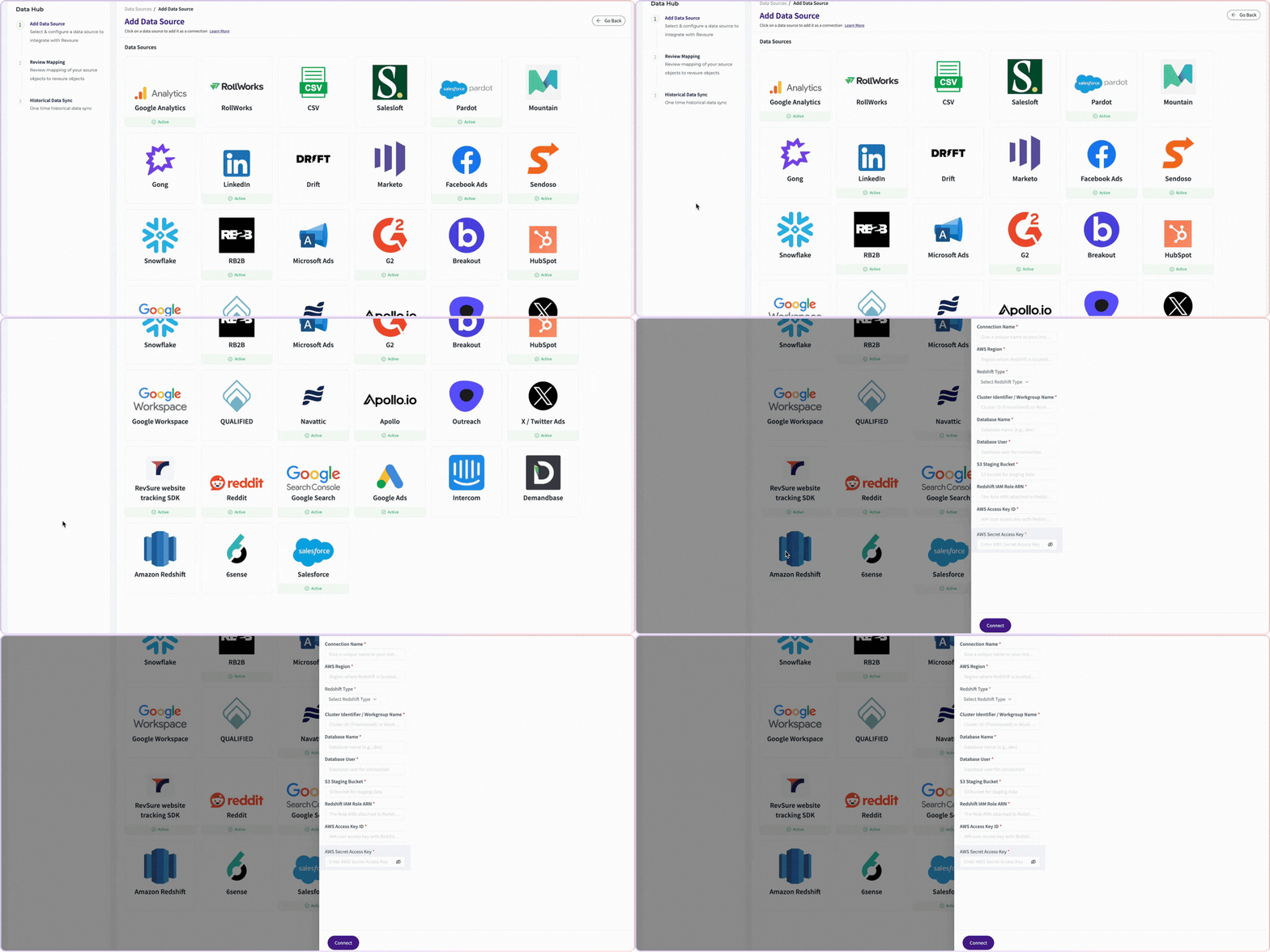
RevSure’s Redshift Data Source bridges this gap. By enabling direct ingestion of structured data from Amazon Redshift into the RevSure data model, organizations can unify warehouse data with GTM signals, creating a more complete, reliable, and actionable foundation for revenue intelligence.
The Divide Between Data Warehouses and Revenue Systems
Enterprise organizations have long recognized the value of centralized data infrastructure. Amazon Redshift, in particular, has become a cornerstone for storing and processing large-scale, structured datasets. However, the utility of that data often stops at reporting.
Revenue teams typically rely on operational systems that capture only a subset of the full customer and business context. Product usage data, billing signals, and behavioral insights may exist in the warehouse, but are rarely integrated into pipeline analysis or forecasting workflows in a meaningful way.
This creates three persistent limitations:
- Revenue decisions are made on incomplete or surface-level data
- Critical signals from product and customer behavior are not reflected in pipeline analysis
- Data teams and revenue teams operate on different versions of truth
RevSure’s Redshift Data Source is designed to unify these layers, bringing warehouse-grade data directly into the revenue operating model.
Bringing Warehouse-Scale Data into the Revenue Model
At its core, the Redshift Data Source enables organizations to connect Amazon Redshift directly to RevSure and ingest large-scale, structured datasets without the need for complex intermediary processes.
This is not a simple data sync. It is a structural integration that allows warehouse data to become part of RevSure’s unified data model. Once ingested, this data can be aligned with accounts, opportunities, and other GTM entities. This means that signals traditionally confined to the warehouse, such as product adoption trends, usage patterns, or financial metrics, can now be analyzed alongside pipeline activity.
The impact is immediate. Revenue teams gain access to a broader and more contextual dataset, enabling deeper insights into both performance and risk.
From Data Completeness to Data Confidence
One of the most significant benefits of integrating Redshift with RevSure is improved data completeness. In many organizations, no single system contains the full picture. CRM data may capture deal stages and contacts, but lacks product context. Product analytics may reflect usage, but not tie directly to revenue outcomes. Financial systems may track billing, but not engagement.
By bringing warehouse data into RevSure, organizations can begin to close these gaps. This creates a more holistic representation of the business, one where multiple data sources converge into a unified model. As completeness increases, so does confidence. Leaders can trust that the insights they are acting on reflect the true state of the business, rather than a partial view.
Enabling Deeper Pipeline and Revenue Analysis
The integration of Redshift data fundamentally expands what is possible in pipeline and revenue analysis. Instead of evaluating opportunities solely based on stage progression or activity levels, teams can incorporate additional dimensions of insight. For example, product usage trends can provide context on customer engagement, while financial data can inform deal prioritization or expansion potential.
This allows for more sophisticated analysis, including:
- Correlating product adoption with pipeline progression
- Identifying leading indicators of expansion or churn risk
- Enhancing forecasting models with behavioral and financial signals
- Segmenting pipeline based on deeper customer attributes
By combining warehouse data with GTM signals, RevSure enables a richer analytical framework, one that reflects both what customers are doing and how revenue is evolving.
Operationalizing Data Across Teams
A key advantage of the Redshift Data Source is that it does not limit warehouse data to analytical use cases alone. It brings that data into an operational context where it can influence how teams execute. Once integrated, data from Redshift can be used alongside existing RevSure workflows, informing how accounts are prioritized, how opportunities are evaluated, and how resources are allocated.
This creates alignment between data and action.
Revenue teams no longer need to rely on separate dashboards or reports to access warehouse insights. Instead, those insights are embedded directly within the systems they use to manage the pipeline and drive execution. This reduces friction, accelerates decision-making, and ensures that data is not just available, but usable.
Built for Enterprise Scale and Complexity
Enterprise environments require solutions that can handle both scale and complexity. Amazon Redshift is designed to manage large volumes of structured data, and RevSure’s integration is built to match that capability. Organizations can ingest high-volume datasets while maintaining performance and consistency within the RevSure platform.
At the same time, the integration supports flexibility in how data is mapped and aligned. This is critical in environments where data structures vary across teams and systems. RevSure ensures that organizations can bring in warehouse data without compromising on structure, governance, or usability.
A More Unified Revenue Operating Model
The introduction of the Redshift Data Source represents a broader shift in how revenue systems are designed. Rather than treating data warehouses and GTM platforms as separate layers, RevSure brings them together into a unified operating model. This allows organizations to move beyond siloed insights and toward a more integrated approach to revenue intelligence.
The result is a system where data flows seamlessly across functions, supporting both strategic analysis and day-to-day execution.
From Data Infrastructure to Revenue Impact
Enterprise organizations have already invested heavily in building robust data infrastructure. The next step is ensuring that this data drives meaningful outcomes. RevSure’s Redshift Data Source enables that transition. By bringing warehouse data into the core of the revenue intelligence system, organizations can move from fragmented insights to a unified, actionable understanding of their business.
Because in modern revenue operations, the advantage does not come from having more data—it comes from making that data work together.