On this page
According to LinkedIn’s B2B Institute, 95% of B2B buyers are not in-market at any given time, yet they are constantly consuming content, engaging with ideas, and shaping their future vendor preferences. A growing portion of that engagement happens on social platforms. Executives comment on industry trends. Operators react to posts about their day-to-day challenges. Buying committee members follow thought leaders discussing solutions to problems they’re trying to solve.
But despite this activity, most B2B marketing teams still struggle to answer a basic question: Does social engagement actually contribute to pipeline?
For years, social media has remained one of the most visible, but least actionable, channels in B2B marketing. Marketers track impressions, likes, shares, and follower growth, but those metrics rarely translate into meaningful revenue insights. As a result, social is often categorized as a “brand awareness channel,” disconnected from the rest of the go-to-market engine.
That model is beginning to break down. The next evolution of B2B social strategy is about moving from vanity metrics to revenue signals, connecting engagement with real people, real accounts, and ultimately real pipeline.
The Limits of Traditional Social Metrics
Most social dashboards focus on performance indicators such as impressions, engagement rates, and follower growth. These metrics are useful for understanding content distribution, but they provide limited insight into buyer behavior. A post receiving hundreds of likes may signal strong interest from the broader market, but it rarely tells you:
- Which companies engaged with the content
- Whether those individuals match your ideal customer profile
- If those interactions correlate with pipeline progression
For revenue teams, those are the questions that matter.
This disconnect is one of the reasons social media often struggles to earn a permanent place in revenue conversations. Sales leaders evaluate marketing channels based on their ability to influence opportunities and pipeline. When social data cannot be connected to accounts or deals, it becomes difficult to prove impact. As a result, many organizations treat social engagement as a surface-level indicator of brand reach rather than a signal of potential buyer interest.
Why Social Engagement Is Becoming More Valuable
The growing importance of social interaction signals is closely tied to changes in how B2B buyers research and evaluate solutions. Today’s buyers spend significant time educating themselves before ever speaking with a vendor. They read industry discussions, follow operators in their field, and engage with thought leadership content long before filling out a form. Much of this early exploration happens publicly on social platforms.
When a senior marketing leader comments on a post about attribution challenges, that interaction reflects more than casual engagement. It often indicates that the topic resonates with a real problem inside their organization. Multiply that behavior across multiple stakeholders within an account, and the engagement begins to resemble a pattern of early buying interest.
These signals appear well before traditional intent indicators such as demo requests or event registrations. In many cases, social activity is one of the first visible signs that a company is exploring a new category or solution space. The challenge is that most marketing systems are not designed to interpret these signals in a meaningful way.
The Shift Toward Person-Level Engagement Signals
The next phase of B2B social analytics focuses less on how content performs and more on who is engaging with it. Rather than simply measuring the volume of interactions, marketers increasingly want to understand:
- Which individuals engaged with the content
- Which accounts those individuals belong to
- Whether those accounts exist in the CRM
- How engagement relates to other buyer activities
This shift toward person-level engagement data transforms social media from a brand measurement tool into a buyer intelligence source. For example, consider a scenario where multiple employees from a target account repeatedly engage with content about revenue attribution or marketing measurement. Individually, those interactions might appear insignificant. But when viewed together, alongside website visits, webinar attendance, or advertising engagement, they form a more complete picture of the account’s interests. Instead of analyzing isolated interactions, revenue teams begin to see patterns of curiosity across buying committees.
Those patterns are far more valuable than simple engagement counts.
Identity Resolution Makes Social Signals Actionable
One of the biggest challenges in turning social engagement into revenue insight is identity resolution. A like or comment on a LinkedIn post may signal interest, but without knowing who that individual is or which account they belong to, marketing and sales teams cannot act on the signal.
Modern revenue data platforms are starting to close this gap by connecting engagement signals with the broader GTM data ecosystem. Platforms like RevSure combine deterministic and probabilistic matching to stitch together fragmented signals from CRM systems, marketing automation platforms, web activity, and social engagement. This allows anonymous interactions to be mapped to known contacts or accounts once engagement occurs.
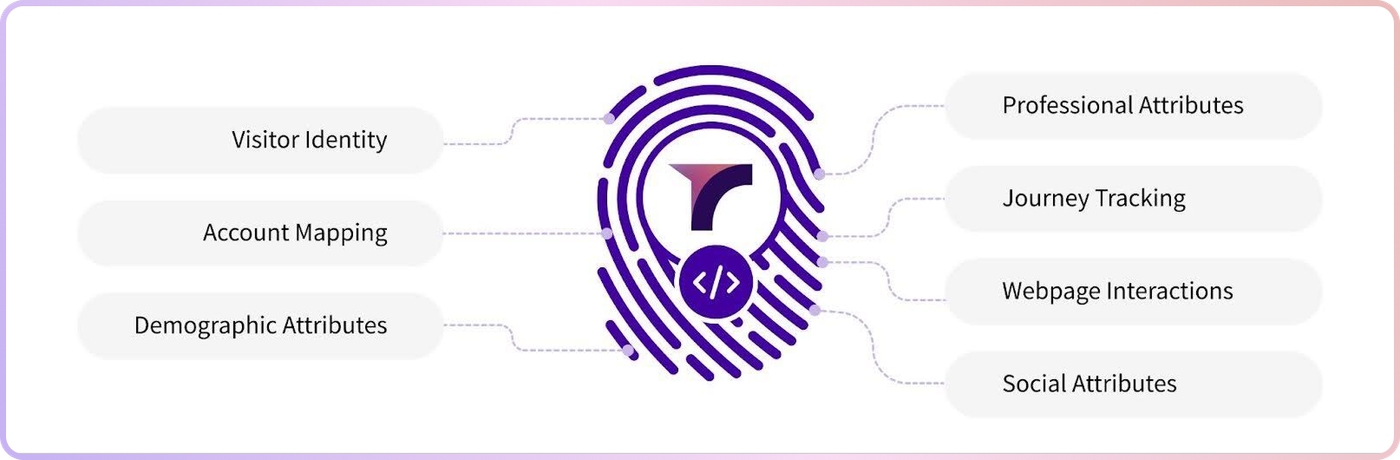
By linking engagement activity with buyer identity and account context, social signals begin to reveal something much more valuable than content performance: who inside a target account is actively exploring a problem space.
Why Sales Teams Care About Social Context
For sales organizations, timing and context are everything. Traditional outreach often relies on cold messages sent without any prior signal that the account is exploring a specific problem. In contrast, engagement signals can reveal when a company is actively thinking about a challenge.
Social interactions provide valuable clues. If multiple stakeholders from a target account are engaging with posts about marketing attribution, revenue forecasting, or pipeline analytics, that behavior can help sales teams tailor their outreach.
The conversation shifts from a generic pitch to something far more relevant:
“I noticed your team has been discussing attribution challenges recently. Many companies in your position are trying to connect marketing spend to pipeline more clearly.” This context increases the likelihood of meaningful conversations because it aligns outreach with topics the buyer is already exploring. When combined with other signals, social engagement can become an early indicator of account readiness.
Rethinking How Teams Measure Social Performance
If social engagement is going to contribute to revenue intelligence, organizations must rethink how they evaluate success. Instead of focusing exclusively on content-level performance, teams should begin asking broader questions:
- Which target accounts interact with our content most frequently?
- Which topics attract engagement from decision-makers?
- Are multiple stakeholders from the same account interacting with similar themes?
- Do engagement patterns correlate with pipeline creation?
Over time, marketers can begin identifying clusters of accounts that consistently engage with specific topics or conversations. These patterns reveal where interest is building within the market. Rather than chasing viral content, the objective becomes identifying which conversations resonate with the right buyers.
Integrating Social Signals into the GTM Engine
The true value of social engagement emerges when it becomes integrated with the broader go-to-market data ecosystem. When social signals connect with CRM data, marketing automation platforms, and account intelligence systems, organizations gain a far richer view of buyer behavior.
This integration enables several capabilities that were previously difficult to achieve.
First, revenue teams can identify which target accounts are interacting with thought leadership content across the organization. This visibility helps prioritize sales outreach toward accounts already showing interest in relevant topics.
Second, marketers can better validate their ideal customer profile. If engagement consistently comes from certain industries, roles, or company sizes, those patterns can inform targeting strategies for future campaigns.
Third, attribution models become more complete. Instead of only capturing form submissions or event attendance, the buyer journey timeline can include earlier engagement signals that influenced awareness and interest.
Together, these capabilities turn social media into a listening layer for the market.
Turning LinkedIn Engagement into Pipeline Signals
Once social signals are integrated into the GTM data layer, the next step is activating those insights for pipeline creation.
For example, RevSure enables GTM teams to track engagement on organic LinkedIn posts and identify both new accounts and previously unknown contacts interacting with company content. These insights can reveal newly active stakeholders within existing accounts, surface potential buying committees, and highlight engagement patterns across topics that matter to revenue teams.
When combined with AI-driven insights, these signals can guide sales teams toward more contextual outreach, helping them reference topics prospects have engaged with, prioritize accounts showing early interest, and align conversations with the challenges buyers are already discussing.
In this way, social engagement evolves from a top-of-funnel awareness signal into a data point that informs pipeline creation and sales timing.
Why Many Companies Haven’t Operationalized Social Signals Yet
Despite the potential value of social engagement data, many organizations have not yet integrated it into their revenue workflows. Social platforms often reveal limited information about the individuals engaging with content, making it difficult to connect those interactions to CRM contacts or accounts.
Data fragmentation also plays a role. Engagement insights typically remain inside platform dashboards rather than flowing into marketing or revenue analytics systems. Even when engagement data is available, teams often lack clear operational processes for acting on it. Without defined workflows, insights remain interesting but unused.
Measurement frameworks also contribute to the challenge. Traditional attribution models were designed around explicit conversion events such as form fills or demo requests. Passive engagement signals do not fit neatly into those models. As a result, many organizations have historically treated social data as separate from revenue analytics.
Social Engagement as a Signal Layer for Modern GTM Teams
Looking ahead, social engagement will likely become part of a broader signal layer that captures how buyers interact with companies across multiple digital environments.
This signal layer will combine insights from:
- website behavior
- advertising engagement
- intent platforms
- CRM activity
- social interaction
When these signals are analyzed together, they provide a much more complete view of account-level buying momentum. Rather than relying on a single conversion event, revenue teams will evaluate patterns of engagement across channels to understand where interest is building and which accounts may be moving toward a buying decision.
Social media plays a particularly important role at the earliest stages of this journey because it captures public expressions of curiosity and professional dialogue. Those conversations often reveal emerging demand before traditional marketing signals appear.
Turning Social Engagement into Revenue Intelligence
The future of B2B social strategy will not be defined by follower counts or viral posts. Instead, it will be shaped by the ability to convert engagement into actionable revenue intelligence.
When organizations can identify which accounts are engaging with their ideas, which stakeholders are participating in conversations, and which topics drive sustained interest, social media becomes far more than a distribution channel. It becomes an early-stage demand signal.
In an environment where buyers increasingly research solutions before speaking with vendors, that visibility is invaluable. Companies that learn to connect social engagement with the rest of their revenue data will gain something far more powerful than content reach.
They will gain a real-time understanding of the conversations shaping future buying decisions.