On this page
Campaign data changes constantly. New campaigns launch, UTMs evolve, naming conventions vary across teams, and marketing motions expand across channels. Over time, these variations make it harder to maintain consistent channel definitions. When classification becomes unclear, attribution accuracy suffers, and reporting becomes harder to trust.
This is why campaign channel classification is such a critical layer in modern marketing measurement. Attribution models, performance reporting, and media planning all rely on consistent channel labels. If the underlying classification is inconsistent, downstream analytics become difficult to interpret.
To make channel classification easier to manage and more transparent, RevSure has introduced enhancements to Campaign Channel Classification. These improvements give teams better visibility into classification coverage, clearer insight into rule behavior, and stronger validation tools before changes affect reporting.
The update introduces three key capabilities designed to help teams operate classification more confidently: the Summary Bar, the Preview Tab, and the Channel Rules & Impact view.
Together, these features make it easier to maintain consistent channel definitions even as campaign structures and marketing programs evolve.
Bringing Visibility to Classification Coverage
One of the most common challenges in campaign classification is understanding the current state of coverage. Teams often discover gaps only after they notice anomalies in reports or attribution dashboards.
The new Summary Bar addresses this by providing an immediate snapshot of classification coverage. Instead of manually reviewing campaign records, teams can quickly see how many campaigns have been classified and where coverage gaps remain.
The Summary Bar highlights:
- Total campaigns currently included in classification
- The proportion of campaigns that are classified versus unclassified
- A breakdown of how campaigns are mapped through existing rules
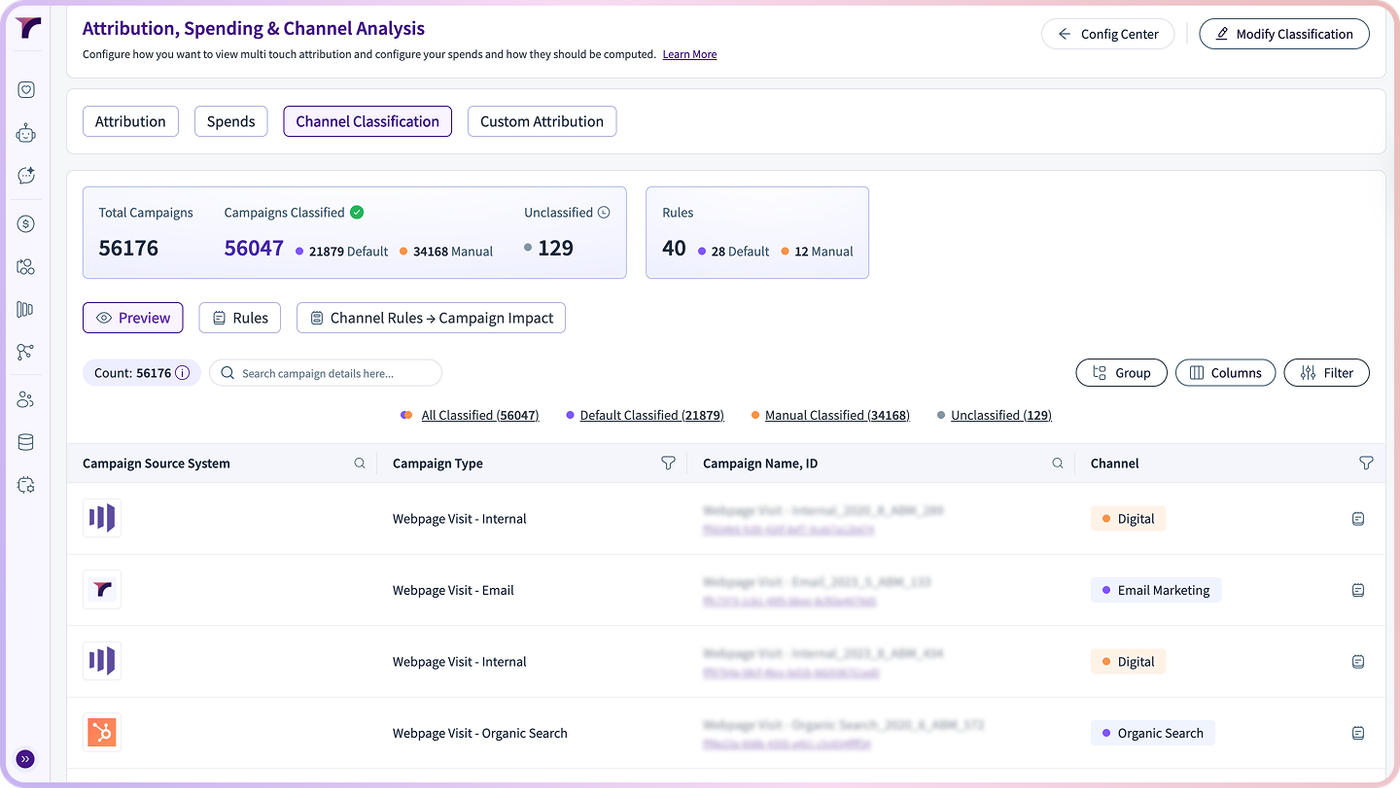
This visibility allows teams to quickly identify where classification rules may need to be expanded or refined. Rather than investigating problems after they affect reporting, teams can proactively monitor the health of their classification system.
By surfacing classification coverage in a single view, the Summary Bar helps teams operate channel classification more like a managed system and less like a manual troubleshooting process.
Validating Rule Logic Before It Affects Reporting
Campaign classification rules often apply to large sets of campaigns. A small change in rule logic can potentially impact dozens or hundreds of records. Without a way to preview the results, teams may only discover unintended effects after dashboards update.
The new Preview Tab helps prevent this problem by allowing teams to validate rule behavior before committing changes.
When building or modifying a rule, users can immediately review which campaigns match the rule conditions. This allows teams to examine the captured set of campaigns and confirm that the logic behaves as expected.
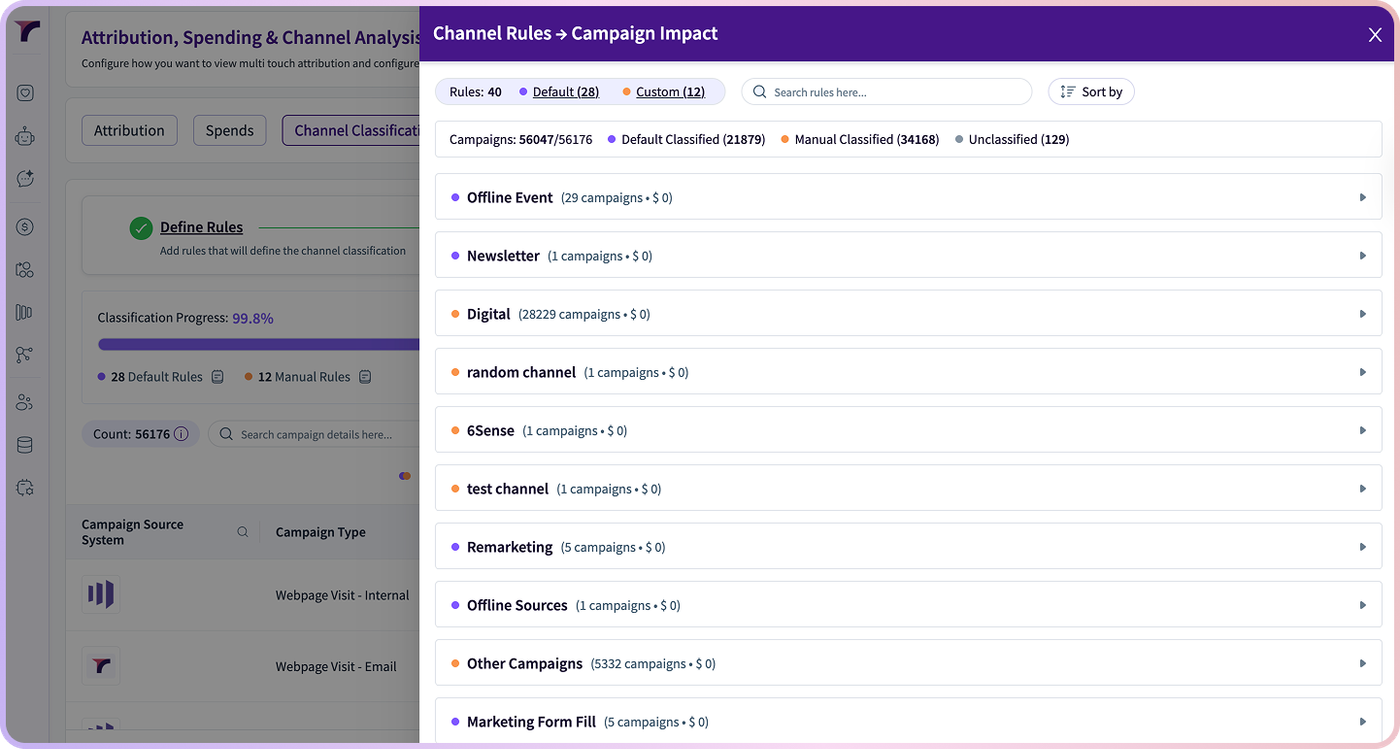
Filters within the preview experience make it easier to inspect specific subsets of campaigns. For example, users can isolate campaigns that may appear incorrectly classified or identify naming variations that require additional rule conditions.
This preview-first workflow helps teams refine classification logic iteratively. Instead of publishing changes and verifying them after the fact, teams can test and validate rules within the configuration workflow itself.
By shifting validation earlier in the process, RevSure reduces the risk of misclassifications and helps ensure that reporting remains stable even as classification logic evolves.
Making Rule Logic Easier to Understand
Campaign classification typically relies on multiple rules working together. Some rules capture highly specific patterns while others act as broader fallbacks. The order in which these rules execute can significantly affect how campaigns are classified.
Without clear visibility into rule precedence, teams may struggle to understand why certain campaigns are mapped to specific channels.
The Channel Rules & Impact view addresses this challenge by providing transparency into the classification logic that drives channel assignments. This view helps teams understand how individual rules operate and how rule order influences outcomes.
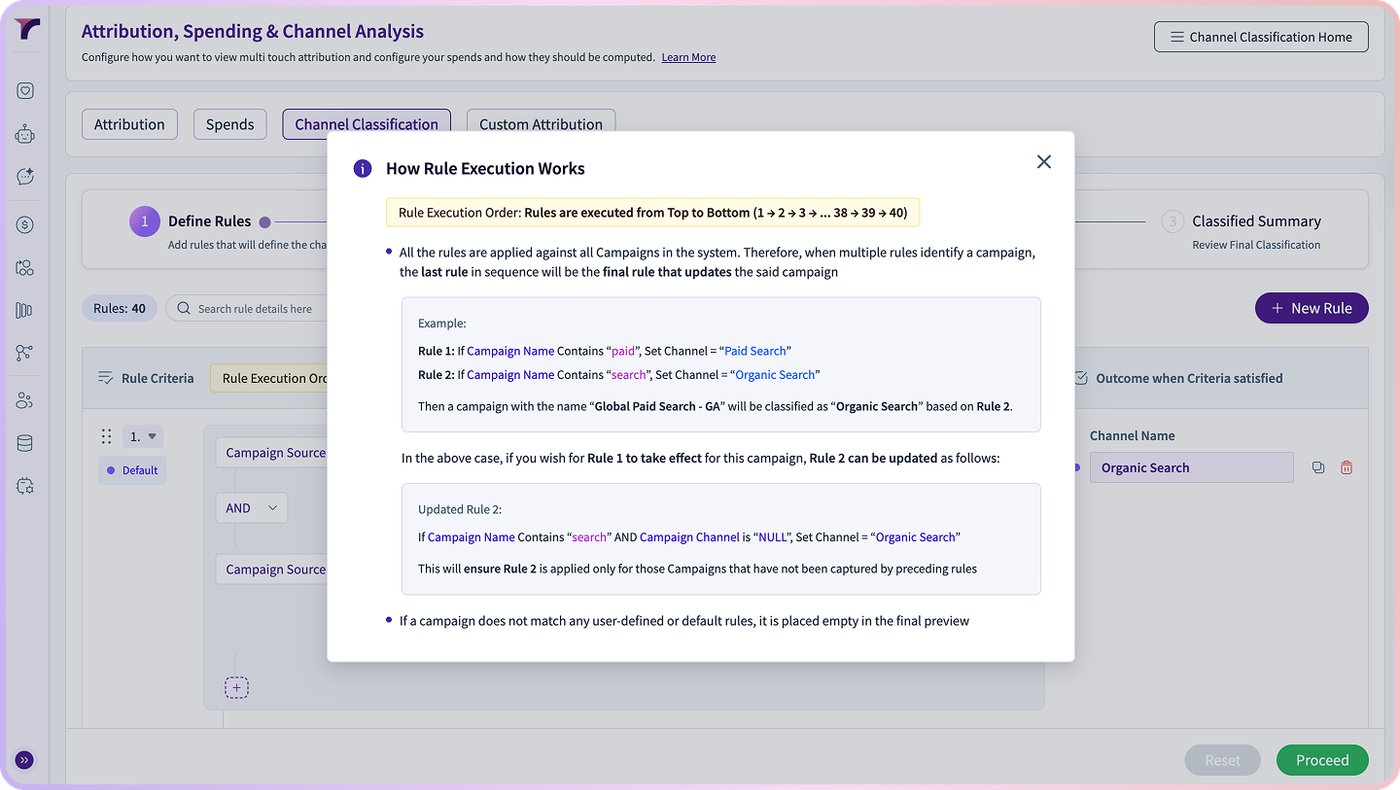
The Channel Rules & Impact view provides clarity on:
- Which rules determine channel assignments
- How rule precedence and execution order affect classification results
- The potential reporting impact when rules are updated
By visualizing rule behavior and execution order, the system makes classification logic easier to audit and refine. Teams can quickly identify when a rule is too broad, too narrow, or being overridden by another rule higher in the sequence. This transparency helps maintain consistency as classification frameworks grow more sophisticated.
Supporting Reliable Attribution and Marketing Analytics
Accurate channel classification is foundational to marketing measurement. When campaigns are mapped consistently, attribution models can assign credit more reliably and performance trends become easier to interpret.
These enhancements help marketing and revenue teams maintain that consistency even as campaign structures change. With clearer coverage visibility, better validation workflows, and transparent rule logic, teams can manage classification confidently without introducing instability into reporting.
Rather than reacting to inconsistencies in downstream dashboards, teams can maintain classification proactively at the source. This ensures that attribution insights, performance analysis, and planning decisions all rely on a stable and trusted channel framework.