Page Visit Journeys Template | Website Engagement & Conversion Insights
On this page
Understand how buyers navigate your website and which journeys drive engagement and progression
Website traffic alone doesn’t explain what’s working. Marketing teams track page views, sales teams look at conversions, and RevOps measures pipeline impact. But without visibility into how visitors move across pages and content types, it’s difficult to optimize engagement or influence pipeline outcomes.
RevSure’s Page Visit Journeys Template solves this by mapping visitor behavior across key pages and content types. It highlights the journeys that generate engagement, drive progression, and contribute to revenue impact, helping teams move from isolated page metrics to a complete understanding of buyer behavior.

Built for B2B Marketing and Revenue Teams
This template is designed for demand generation, digital marketing, content strategy, and RevOps teams that need deeper visibility into website engagement.
Whether your GTM motion includes inbound, outbound, ABM, or product-led growth, this template shows how prospects actually explore your site and which experiences influence conversion. By consolidating page visits, engagement signals, and progression impact, teams can move from assumptions to data-backed optimization.
Top Page Visit Journeys
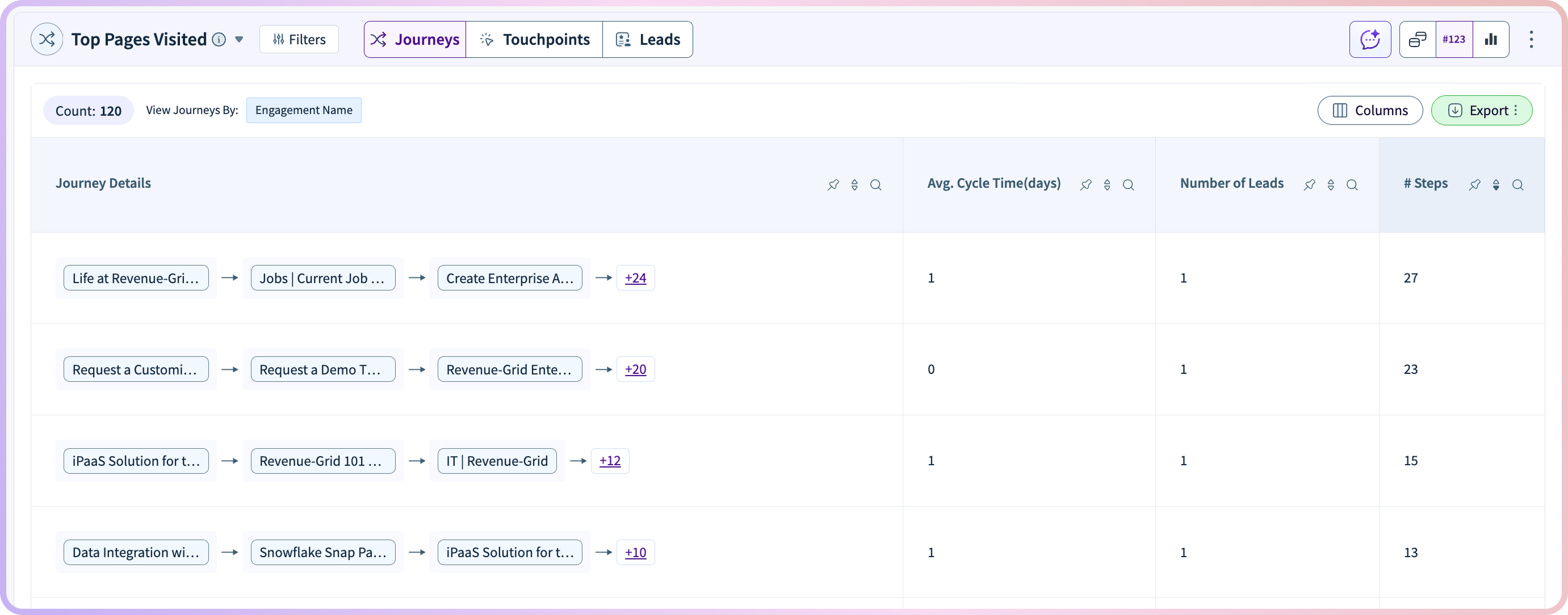
The template surfaces the most common visitor paths across your website, revealing which sequences of pages are viewed together and how users explore your content.
This helps teams understand:
- Which pages consistently appear in high-engagement journeys
- Whether visitors move from awareness content to product or pricing pages
- Which entry points lead to deeper exploration
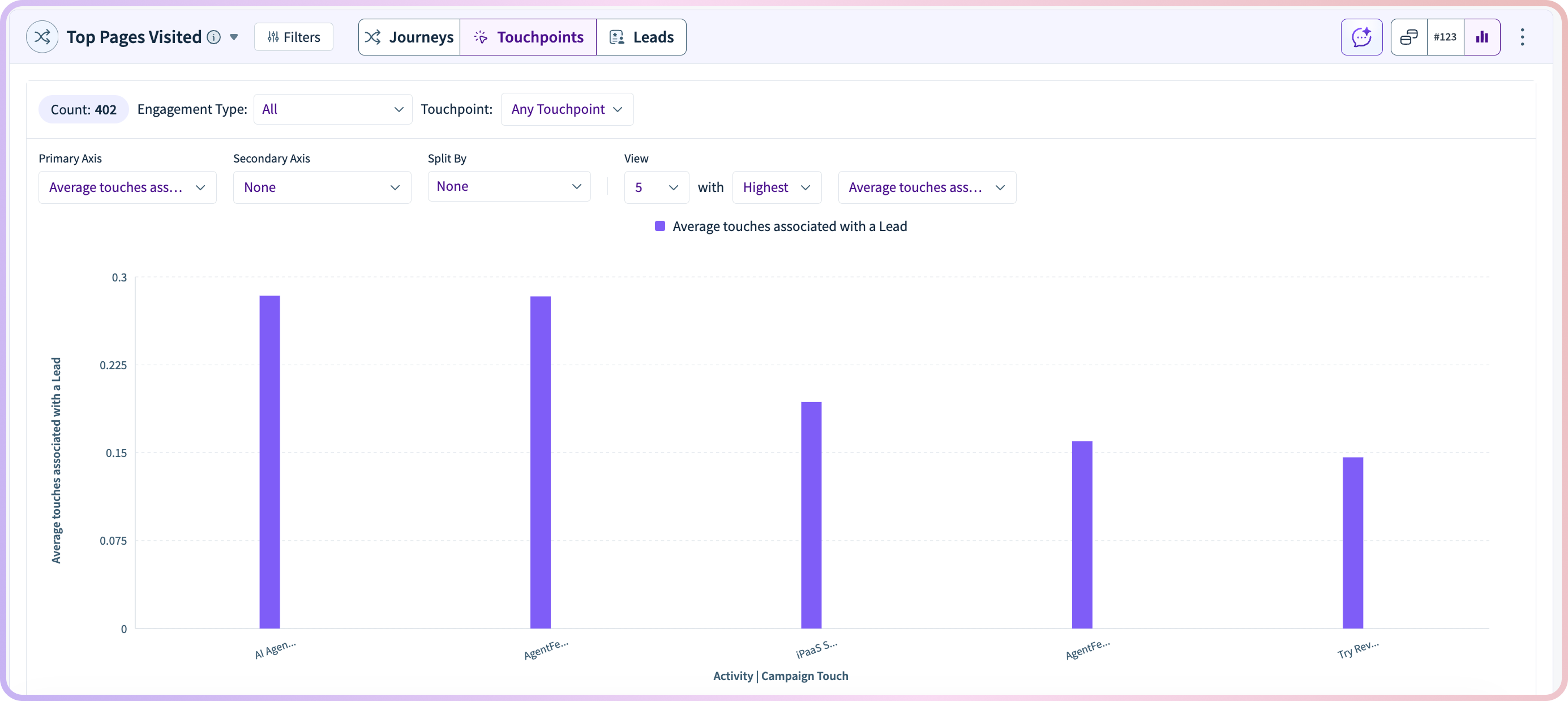
These insights help refine navigation, internal linking, and content placement to guide buyers more effectively.
Journeys Driving Progression
Not all journeys contribute equally to pipeline movement. The template highlights which page paths are most associated with deeper engagement and account progression.
Teams can use this to identify where journeys accelerate or stall. It becomes easier to pinpoint drop-off points, optimize calls-to-action, and improve next-step experiences. Instead of optimizing individual pages, teams can focus on strengthening entire journeys that influence buying decisions.
Page Visits by Page Type
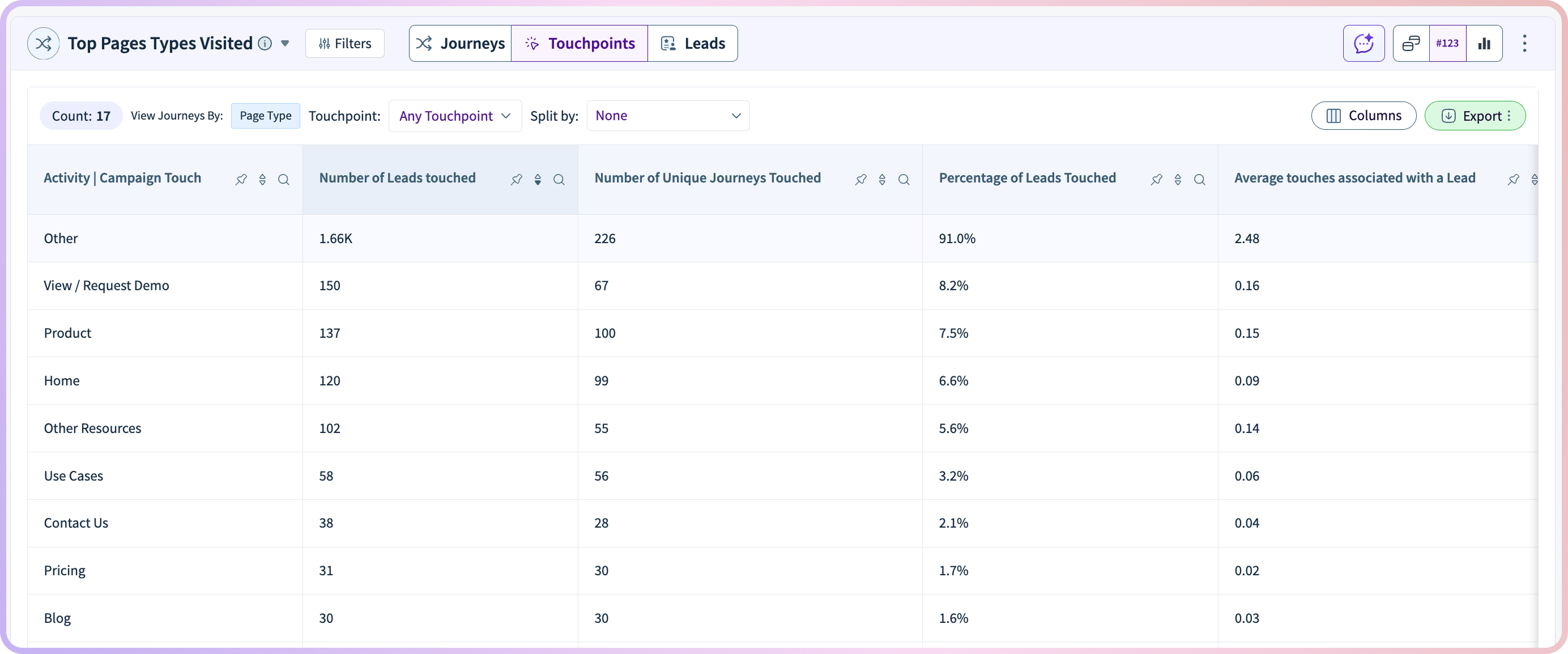
The template categorizes engagement by page type, such as blog, product, pricing, solutions, or resources—showing where attention is concentrated across the site.
This view helps evaluate how different types of content contribute to engagement and whether high-value pages are receiving sufficient traffic. It also reveals how visitors distribute their attention, enabling better alignment between content strategy and revenue goals.
Page Types Driving Progression
Beyond engagement, the template shows which page types are most closely associated with progression and deeper funnel activity.
Teams can uncover:
- Which content types correlate with conversion events
- How product and pricing pages influence deal momentum
- Where educational content supports or slows progression
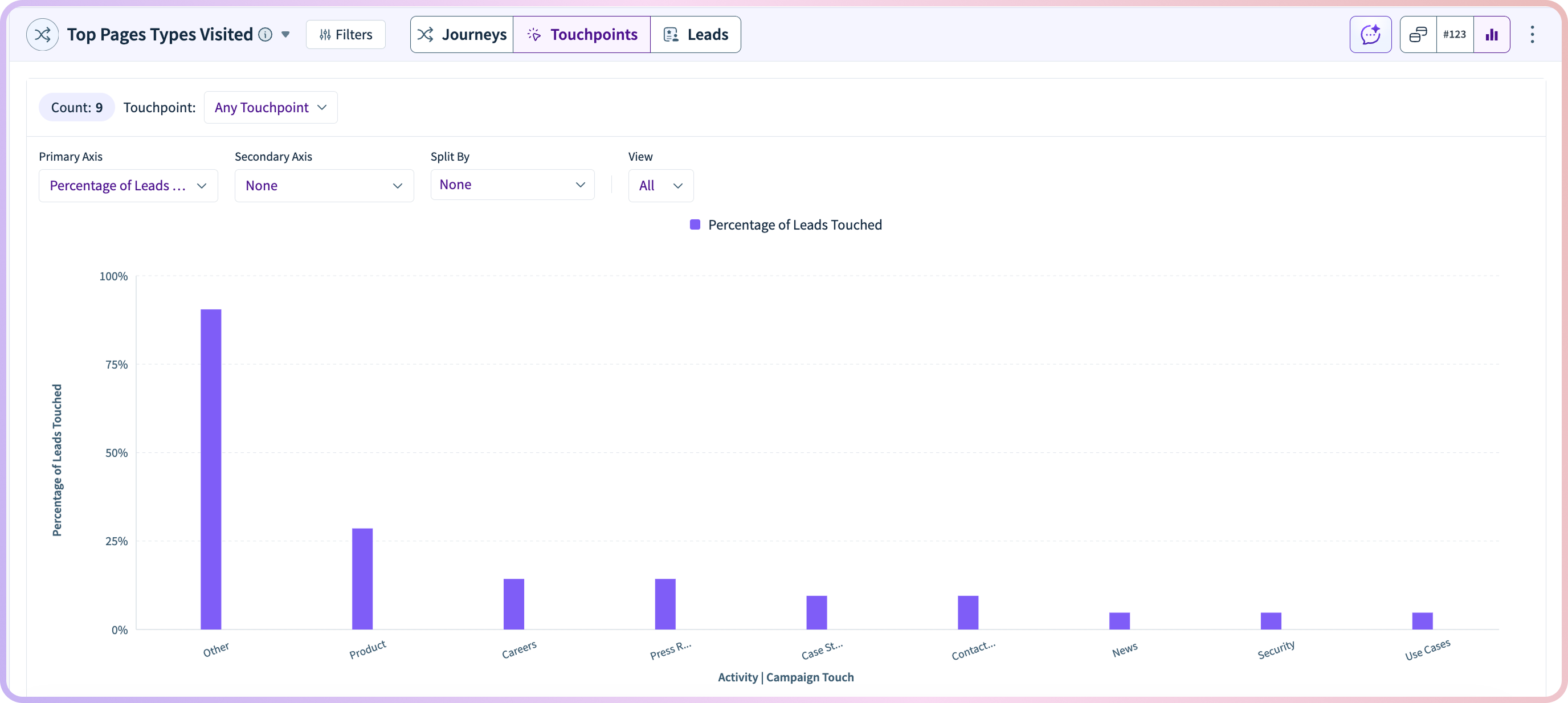
These insights help prioritize content investments that directly contribute to pipeline acceleration.
From Page Metrics to Buyer Journey Intelligence
The Page Visit Journeys Template helps teams move beyond surface-level website metrics to understand how buyers evaluate and progress toward a decision. By connecting page paths, engagement patterns, and progression signals, it provides a clear view of how digital experiences influence revenue outcomes.
Marketing teams can refine content strategy. RevOps can connect engagement to pipeline movement. Sales gains context on buyer research behavior. Leadership gains confidence in how website engagement supports growth.
Next step: If you’re using RevSure, launch the Page Visit Journeys Template to uncover the buyer paths that drive real impact. If not, book a demo to see how RevSure turns website engagement into measurable pipeline progression.
Frequently Asked Questions
What is a page visit journeys dashboard?
A page visit journeys dashboard maps how visitors move across website pages and content types, showing which paths drive engagement, progression, and pipeline impact.
Why is website traffic alone not enough to measure performance?
Traffic only shows volume, not behavior. Without understanding how visitors navigate and engage across pages, it’s difficult to optimize journeys that lead to conversion.
What insights does this template provide?
It highlights top visitor paths, engagement patterns, page-type performance, and which journeys contribute to deeper funnel progression.
How does this dashboard track buyer journeys?
It analyzes sequences of page visits and content interactions to show how users move from entry points to deeper engagement and conversion-related pages.
Who should use a page visit journeys dashboard?
Demand generation, digital marketing, content teams, RevOps, and sales teams use it to understand and optimize how buyers engage with the website.
What are high-performing page journeys?
High-performing journeys are sequences of pages that consistently lead to strong engagement, deeper exploration, and progression toward pipeline stages.
Can this template identify drop-offs in user journeys?
Yes. It highlights where visitors disengage or stop progressing, helping teams optimize navigation, content flow, and calls-to-action.
How does it evaluate page type performance?
It groups pages by type,l such as blog, product, or pricing, and shows how each contributes to engagement and progression across the funnel.
How is this different from traditional web analytics tools?
Traditional tools focus on page-level metrics, while this template connects page sequences to engagement quality and pipeline progression.
What metrics are important for analyzing buyer journeys?
Key metrics include page sequences, engagement depth, time spent across journeys, progression rates, drop-off points, and conversion-related interactions.